

A Biblical Guide to Inner Healing, Spiritual Freedom, and Deliverance
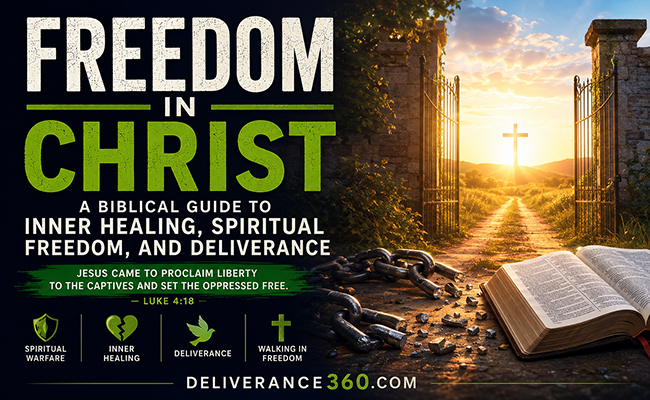
Table of Contents
- Introduction: Jesus Still Sets Captives Free
- Understanding Inner Healing and Deliverance
- The Reality of Spiritual Warfare
- The Mission and Commission of Jesus
- Unforgiveness, Doubt, and Unbelief
- Four Elements of Deliverance Ministry
- The Ministry of Inner Healing
- Trauma, Abuse, Rejection, and Abandonment
- Understanding Witchcraft and the Occult
- Recognizing Possible Witchcraft Attacks
- Cursed and Occult Objects
- Understanding Generational Curses
- Preparing for a Deliverance Session
- Conclusion: Walking in Lasting Freedom
- Sexual abuse or molestation
- Incest
- Physical abuse
- Verbal abuse
- Rejection
- Abandonment
- Betrayal
- Divorce
- Grief
- Bullying
- Racism
- Neglect
- Growing up in a toxic environment
- Principalities
- Powers
- Rulers of the darkness of this world
- Spiritual wickedness in high places
- The belt of truth
- The breastplate of righteousness
- The preparation of the gospel of peace
- The shield of faith
- The helmet of salvation
- The sword of the Spirit, which is the Word of God
- Prayer and spiritual alertness
- Preaching good news
- Healing the brokenhearted
- Proclaiming freedom to captives
- Opening spiritual prisons
- Comforting those who mourn
- Replacing ashes with beauty
- Replacing mourning with joy
- Replacing heaviness with praise
- Approving what happened
- Pretending the offense was insignificant
- Remaining in an abusive situation
- Refusing to establish healthy boundaries
- Avoiding appropriate legal action
- Parents
- Spouses
- Former spouses
- Church leaders
- Abusers
- Friends
- Employers
- Themselves
- Strongholds
- Legal rights or open doors
- Inner healing
- Casting out demons
- “I am worthless.”
- “God does not love me.”
- “I will always be rejected.”
- “I can never change.”
- “My past defines me.”
- “I deserve what happened to me.”
- Unrepented sin
- Unforgiveness
- Occult involvement
- Sexual immorality (including masterbation and pornography)
- Ungodly vows
- Idolatry
- Persistent hatred and anger
- Participation in false religion
- Possession of occult objects
- Incest
- Molestation
- Sexual assault
- Verbal abuse
- Physical abuse
- Rejection
- Abandonment
- Growing up in a toxic environment
- Witchcraft
- Divination
- Sorcery
- Mediumship
- Spiritism
- Necromancy
- Fortune-telling
- Conjuring spells
- Tarot cards
- Psychic readings
- Palm reading
- Crystal-ball readings
- Tea-leaf readings
- Astrology
- Horoscopes
- Numerology
- Charms
- Amulets
- Spells
- Hexes
- Love potions
- Objects prepared through occult rituals
- Attempts to fight witchcraft through other forms of witchcraft
- Occult ceremonies
- False worship
- Divination
- Spirit communication
- Spell work
- Idolatry
- Addiction
- Abuse
- Violence
- Sexual immorality
- Idolatry
- Occult involvement
- Divorce
- Bitterness
- Fear
- Poverty-related behaviors
- Faith and church background
- Trauma
- Abuse
- Unforgiveness
- Sexual history
- Occult involvement
- Addictions
- Recurring dreams
- Family patterns
- Medical and mental health history
- Daily prayer
- Regular Bible study
- Repentance
- Forgiveness
- Renewing the mind
- Christian fellowship
- Worship
- Healthy boundaries
- Accountability
- Obedience to the Holy Spirit
Introduction: Jesus Still Sets Captives Free
Many Christians understand that Jesus came to forgive sin and give eternal life, but fewer have been taught that His ministry also included healing the brokenhearted, setting captives free, and delivering people from spiritual oppression.
The Gospels present Jesus as Savior, Healer, Deliverer, Teacher, and King. He did not merely prepare people to enter heaven after death. He demonstrated the transforming power of the Kingdom of God in their lives.
People came to Jesus carrying sickness, grief, rejection, shame, spiritual oppression, torment, and the effects of sin. He ministered to the whole person. He forgave sins, healed bodies, restored dignity, confronted darkness, and brought people into freedom.
Inner healing and deliverance should therefore never become ministries that focus more on demons than on Jesus. The goal is not to create fear, sensationalism, or fascination with the kingdom of darkness. The purpose is to help people encounter Jesus Christ, receive healing, close spiritual doors, and walk in the freedom He purchased through His death and resurrection.
This guide presents a biblical foundation for understanding inner healing, deliverance, spiritual warfare, unforgiveness, emotional wounds, witchcraft, generational patterns, and the practical preparation necessary for responsible ministry.
“If the Son therefore shall make you free, ye shall be free indeed.”
John 8:36, KJV
1. Understanding Inner Healing and Deliverance
What Is Deliverance?
Deliverance is the act of rescuing, liberating, or setting someone free from bondage. Within Christian ministry, deliverance generally refers to freedom from spiritual oppression, demonic influence, ungodly agreements, sinful bondage, curses, and other works of darkness.
Deliverance is not accomplished through human strength. No minister possesses power independently of Jesus Christ. Freedom comes through the authority of Jesus, the work of the Holy Spirit, the truth of Scripture, repentance, forgiveness, and faith.
Deliverance should always direct attention toward Jesus. The minister is simply a servant. Jesus is the Deliverer.
What Is Inner Healing?
Inner healing is the work of the Holy Spirit within the wounded areas of the heart and soul. It occurs as a person honestly acknowledges pain, releases unforgiveness, rejects lies, receives biblical truth, and allows Jesus to bring healing to memories and emotional wounds.
Many people carry pain from experiences such as:
These experiences may produce anger, shame, fear, guilt, bitterness, self-hatred, distrust, and difficulty forming healthy relationships.
Inner healing does not deny that something painful occurred. It invites the presence and truth of Jesus into the place where the pain remains.
Inner healing and deliverance frequently work together. Emotional wounds may become areas that the enemy seeks to exploit. Deliverance may remove spiritual oppression, while inner healing addresses the wounds, lies, and unresolved pain connected to that oppression.
2. The Reality of Spiritual Warfare
Spiritual warfare is the conflict between the Kingdom of God and the kingdom of darkness. Scripture teaches that believers are not merely fighting human personalities, political systems, or difficult circumstances. There is an unseen spiritual realm influencing events in the visible world.
Ephesians 6:10–13, KJV
“Finally, my brethren, be strong in the Lord, and in the power of his might.
Put on the whole armour of God, that ye may be able to stand against the wiles of the devil.
For we wrestle not against flesh and blood, but against principalities, against powers, against the rulers of the darkness of this world, against spiritual wickedness in high places.
Wherefore take unto you the whole armour of God, that ye may be able to withstand in the evil day, and having done all, to stand.”
Paul begins by telling believers to be strong in the Lord. Spiritual warfare cannot be fought successfully through human anger, intelligence, personality, or willpower. Our strength comes from our relationship with Jesus and our dependence on the Holy Spirit.
Paul identifies several levels of spiritual opposition:
Christians should not become obsessed with identifying ranks of demons. The central lesson is that spiritual opposition is real and that believers must stand in the authority and protection provided by God.
The Whole Armor of God
The armor of God includes:
Spiritual warfare is not merely commanding demons to leave. It includes knowing the truth, living righteously, walking in faith, renewing the mind, proclaiming the gospel, using Scripture, and maintaining a life of prayer.
3. The Mission and Commission of Jesus
The ministry of Jesus was announced prophetically in Isaiah 61. Jesus later applied this passage to Himself in Luke 4.
Isaiah 61:1–3, KJV
“The Spirit of the Lord GOD is upon me; because the LORD hath anointed me to preach good tidings unto the meek; he hath sent me to bind up the brokenhearted, to proclaim liberty to the captives, and the opening of the prison to them that are bound;
To proclaim the acceptable year of the LORD, and the day of vengeance of our God; to comfort all that mourn;
To appoint unto them that mourn in Zion, to give unto them beauty for ashes, the oil of joy for mourning, the garment of praise for the spirit of heaviness; that they might be called trees of righteousness, the planting of the LORD, that he might be glorified.”
This passage reveals several aspects of Christ’s mission:
Jesus came to restore what sin, trauma, oppression, and darkness had damaged.
Jesus Commissioned His Disciples
Matthew 10:5–8, KJV
“These twelve Jesus sent forth, and commanded them, saying, Go not into the way of the Gentiles, and into any city of the Samaritans enter ye not:
But go rather to the lost sheep of the house of Israel.
And as ye go, preach, saying, The kingdom of heaven is at hand.
Heal the sick, cleanse the lepers, raise the dead, cast out devils: freely ye have received, freely give.”
Jesus connected preaching the Kingdom with healing and deliverance. The disciples were not sent merely to give sermons. They were commanded to demonstrate the compassion and authority of God.
Deliverance ministry is therefore not supposed to be entertainment or a public spectacle. It is an act of compassion toward people who are suffering.
Mark 16:17, KJV
“And these signs shall follow them that believe; In my name shall they cast out devils; they shall speak with new tongues.”
Jesus said these signs would follow those who believe. The authority belongs to Jesus, and His name is the basis upon which believers minister.
4. Unforgiveness, Doubt, and Unbelief
Unforgiveness
Mark 11:25, KJV
“And when ye stand praying, forgive, if ye have ought against any: that your Father also which is in heaven may forgive you your trespasses.”
Unforgiveness is one of the most common obstacles encountered during inner healing and deliverance ministry. Many born-again Christians struggle with resentment toward others or condemnation toward themselves.
Forgiveness does not mean:
Forgiveness means releasing personal revenge and surrendering judgment to God.
A person may need to forgive:
Forgiveness may be a process. A person may make the decision to forgive before their emotions fully align with that decision.
Doubt and Unbelief
Doubt is uncertainty, questioning, or difficulty comprehending. Unbelief is a settled or stubborn refusal to accept truth.
Honest questions are not necessarily rebellion. A person may struggle to understand while still desiring to believe. However, deliberate rejection of God’s truth can prevent someone from responding in faith.
Deliverance ministers should not shame people for asking questions. They should patiently teach Scripture and allow the Holy Spirit to build faith.
5. Four Elements of Deliverance Ministry
Deliverance ministry generally involves four interconnected areas:
1. Strongholds
Strongholds are deeply established patterns of thinking, belief, and agreement that oppose the truth of God.
Proverbs 23:7, KJV
“For as he thinketh in his heart, so is he...”
A person may believe:
These lies must be confronted with Scripture. Casting out a demon without renewing the mind may leave the person vulnerable to returning to the same patterns.
2. Legal Rights or Open Doors
The term “legal right” is often used in deliverance ministry to describe an area of sin, agreement, or involvement that the enemy seeks to exploit.
Possible open doors may include:
These doors are addressed through repentance, confession, forgiveness, renunciation, removal of occult objects, and obedience to God.
3. Inner Healing
Inner healing may be required when someone has experienced abuse, rape, molestation, rejection, abandonment, violence, or severe trauma.
The minister should provide a safe and confidential environment, listen carefully, avoid forcing memories, and allow the Holy Spirit to lead the process.
4. Casting Out Demons
Mark 16:17, KJV
“And these signs shall follow them that believe; In my name shall they cast out devils...”
Once spiritual doors have been addressed, the minister may command unclean spirits to leave in the name of Jesus Christ.
The focus should remain on Jesus, not on conversations with demons or dramatic manifestations.
6. The Ministry of Inner Healing
Psalm 34:18, KJV
“The LORD is nigh unto them that are of a broken heart; and saveth such as be of a contrite spirit.”
Psalm 147:3, KJV
“He healeth the broken in heart, and bindeth up their wounds.”
God does not despise wounded people. He draws near to them.
Anger
Psalm 37:8, KJV
“Cease from anger, and forsake wrath: fret not thyself in any wise to do evil.”
Anger is often a surface emotion covering deeper pain, rejection, fear, humiliation, or grief. Healing requires identifying the wound beneath the anger.
Bitterness
Hebrews 12:15, KJV
“Looking diligently lest any man fail of the grace of God; lest any root of bitterness springing up trouble you, and thereby many be defiled.”
Bitterness affects more than the person holding it. It can damage families, friendships, churches, and future relationships.
Guilt and Condemnation
Romans 8:1, KJV
“There is therefore now no condemnation to them which are in Christ Jesus...”
Conviction leads a person toward repentance and restoration. Condemnation tells them they are hopeless and permanently rejected.
The Holy Spirit convicts specifically and points toward Jesus. Condemnation attacks identity and produces despair.
Shame
Romans 10:11, KJV
“For the scripture saith, Whosoever believeth on him shall not be ashamed.”
1 John 1:9, KJV
“If we confess our sins, he is faithful and just to forgive us our sins, and to cleanse us from all unrighteousness.”
Shame says, “I am bad.” The gospel says that sin can be confessed, forgiven, and cleansed through Jesus Christ.
Self-Hatred and Unforgiveness Toward Self
Some people find it easier to forgive others than to forgive themselves. They may believe they deserve lifelong punishment for past mistakes.
Self-forgiveness should not become an excuse for sin. It means agreeing with God that the blood of Jesus is sufficient to forgive what has been confessed and forsaken.
7. Trauma, Abuse, Rejection, and Abandonment
Inner healing ministry frequently addresses wounds produced by:
Psalm 27:10, KJV
“When my father and my mother forsake me, then the LORD will take me up.”
Parental rejection can deeply affect identity. A person may spend years trying to earn acceptance from others because they never felt accepted at home.
God does not promise that every human relationship will remain faithful. He promises that He will receive us.
1 Thessalonians 5:23, KJV
“And the very God of peace sanctify you wholly; and I pray God your whole spirit and soul and body be preserved blameless unto the coming of our Lord Jesus Christ.”
God is concerned with the whole person: spirit, soul, and body. Wise ministry recognizes that emotional, spiritual, relational, psychological, and physical concerns may overlap.
8. Understanding Witchcraft and the Occult
Witchcraft may be broadly described as seeking supernatural knowledge, power, protection, manipulation, or control through sources that oppose God.
Biblical categories include:
Divination
Divination is the attempt to obtain supernatural information apart from God. Modern forms may include:
Acts 16:16–18, KJV
“And it came to pass, as we went to prayer, a certain damsel possessed with a spirit of divination met us, which brought her masters much gain by soothsaying:
The same followed Paul and us, and cried, saying, These men are the servants of the most high God, which shew unto us the way of salvation.
And this did she many days. But Paul, being grieved, turned and said to the spirit, I command thee in the name of Jesus Christ to come out of her. And he came out the same hour.”
The girl's words sounded accurate, but the spiritual source was wrong. This teaches that not every supernatural message comes from God.
Sorcery
Sorcery may involve objects, substances, charms, spells, potions, amulets, or rituals intended to produce a supernatural effect.
Examples may include:
Deuteronomy 18:10–12, KJV
“There shall not be found among you any one that maketh his son or his daughter to pass through the fire, or that useth divination, or an observer of times, or an enchanter, or a witch,
Or a charmer, or a consulter with familiar spirits, or a wizard, or a necromancer.
For all that do these things are an abomination unto the LORD...”
God forbids occult practices because they direct people toward spiritual sources that oppose Him.
9. Recognizing Possible Witchcraft Attacks
The presentation identifies several patterns sometimes associated with spiritual attacks. These include:
Confusion and Disorientation
A person may feel unusually confused, distracted, clumsy, or unable to focus on their spiritual purpose.
Emotional Exhaustion and Heaviness
A person may experience severe discouragement, emotional fatigue, heaviness, headaches, or tension around the neck and head.
Fear and Disturbing Imagery
A person may experience recurring fear, disturbing mental images, nightmares, or difficulty obtaining restful sleep.
Conflict and Division
When spiritual pressure affects a congregation, there may be increased irritation, impatience, gossip, backbiting, rebellion, division, and withdrawal from fellowship.
10. Cursed and Occult Objects
Deuteronomy 7:25–26, KJV
“The graven images of their gods shall ye burn with fire: thou shalt not desire the silver or gold that is on them, nor take it unto thee, lest thou be snared therein: for it is an abomination to the LORD thy God.
Neither shalt thou bring an abomination into thine house, lest thou be a cursed thing like it: but thou shalt utterly detest it, and thou shalt utterly abhor it; for it is a cursed thing.”
This passage warned Israel not to preserve objects connected to idolatrous worship merely because they were financially valuable.
Christians should prayerfully examine items connected to:
Not every unusual, foreign, antique, or culturally unfamiliar object is demonic. Wisdom is necessary. The concern is an object’s actual use and spiritual association, not superstition or fear.
11. Understanding Generational Curses
Families may repeat patterns across generations. These may include:
Some patterns are learned behaviors. Others may involve trauma, family culture, genetic vulnerability, or spiritual influence. Ministers should avoid oversimplifying complex family problems.
Exodus 20:4–5, KJV
“Thou shalt not make unto thee any graven image, or any likeness of any thing that is in heaven above, or that is in the earth beneath, or that is in the water under the earth:
Thou shalt not bow down thyself to them, nor serve them: for I the LORD thy God am a jealous God, visiting the iniquity of the fathers upon the children unto the third and fourth generation of them that hate me.”
This passage specifically concerns idolatry and covenant rebellion. It shows that one generation's choices can affect future generations.
However, Scripture also teaches personal responsibility.
Ezekiel 18:20, KJV
“The soul that sinneth, it shall die. The son shall not bear the iniquity of the father, neither shall the father bear the iniquity of the son...”
A person is not automatically condemned for the sins of their ancestors. Through Jesus Christ, believers can reject sinful family patterns and begin a new legacy of obedience.
Galatians 3:13, KJV
“Christ hath redeemed us from the curse of the law, being made a curse for us...”
Christ is the believer's ultimate foundation for freedom. Repentance, renunciation, discipleship, renewed thinking, and obedience help break destructive cycles.
12. Preparing for a Deliverance Session
1. Determine Whether the Person Knows Jesus
Deliverance is not a substitute for salvation. The person should understand the gospel and be encouraged to place their faith in Jesus Christ.
2. Conduct Pre-Deliverance Counseling
Listen carefully to the person's story. Ask about:
Questions should be asked compassionately. The person should never be pressured to disclose more than they are ready to share.
3. Determine Whether the Person Is Ready
Deliverance cannot replace repentance. A person who intends to continue in known sin may not be prepared to close the doors connected to their bondage.
4. Determine Whether the Minister Is Ready
The minister should be spiritually, emotionally, and practically prepared. Deliverance should generally be conducted by a trained team rather than by one isolated individual.
5. Pray Before the Session
Invite the Holy Spirit to lead. Ask God for wisdom, protection, discernment, compassion, and truth.
6. Depend on God, Not Techniques
Deliverance is not a formula. Ministers should avoid believing that certain phrases, volumes, objects, or routines possess power by themselves.
7. Minister in Faith
Faith is confidence in Jesus, not confidence in the minister.
8. Protect Confidentiality
People may share deeply personal information. Their stories should not be repeated publicly without clear and informed permission.
9. Take Appropriate Notes
Notes may help identify patterns and guide the session. They should be securely stored and handled responsibly.
10. Listen to the Holy Spirit
The minister must remain sensitive to the Holy Spirit while staying grounded in Scripture, wisdom, and compassion.
Conclusion: Walking in Lasting Freedom
Deliverance should never be treated as the end of discipleship. It is often the beginning of a deeper walk with Jesus.
Lasting freedom requires:
Jesus warned that an empty house could become vulnerable again. Freedom must therefore be followed by spiritual filling, renewed thinking, and a life surrendered to God.
John 8:31–32, KJV
“If ye continue in my word, then are ye my disciples indeed;
And ye shall know the truth, and the truth shall make you free.”
Freedom is not found in fear of demons. It is found in knowing Jesus Christ, believing His Word, and walking in the power of the Holy Spirit.
Do not let fear prevent you from seeking healing, receiving prayer, or obeying God's call. Fear paralyzes faith, delays obedience, and often stands between people and the freedom God desires for them.
Jesus still heals the brokenhearted. He still sets captives free. He still restores wounded lives.